
Capabilities
From sequence to a documented, transferable process
SysGene connects expression, upstream development, recovery, purification, analytical characterization, scale-up and technology transfer around defined program goals.
One connected development plan
Feasibility
Assess molecule fit and define the target quality profile.
Expression strategy
Select the platform route and development mode.
Upstream development
Host/cell-line, media, feed and process-mode work.
Downstream & analytics
Recovery, purification and characterization.
Scale-up & transfer
Documented, transfer-ready process package.
Manufacture
Analytical and method development, with 5 L mammalian and 30–1,000 L microbial capacity; 5,000 L planned.
End-to-end microbial
Every stage of a microbial programme, connected
Strain and construct work, fermentation, recovery, purification, analytics, scale-up and transfer are planned as one sequence rather than handed between disconnected teams. Programs may be scoped for GMP or non-GMP manufacture, and specialized capabilities may be delivered through qualified partners.
Discuss a Development NeedDevelopment capabilities
Go deeper on any stage
Upstream development
Expression strategy, host or cell-line work, media and process-mode development.
Explore→Analytics & characterization
Identity, purity, binding, activity and impurity-control methods.
Explore→Scale-up & transfer
Non-GMP and GMP manufacturing scale, documentation and site-transfer support.
Explore→Characterization
Characterization capabilities for peptides, proteins and mAbs
SysGene characterizes molecules across primary, secondary and higher-order structure and biological function, with each analytical programme tailored to the molecule class.
Fewer than 40 amino acids
Peptides
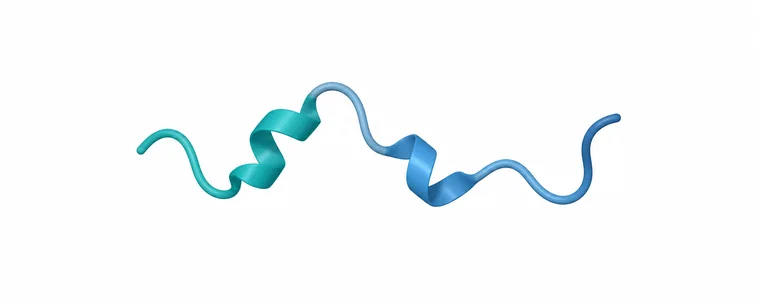
MW ~0.5–5 kDa
- Short linear or simple cyclic chains.
- Lack tertiary folding; highly flexible in solution.
Analytical focus: Molecular weight and LC-MS purity.
More than 40 amino acids
Proteins
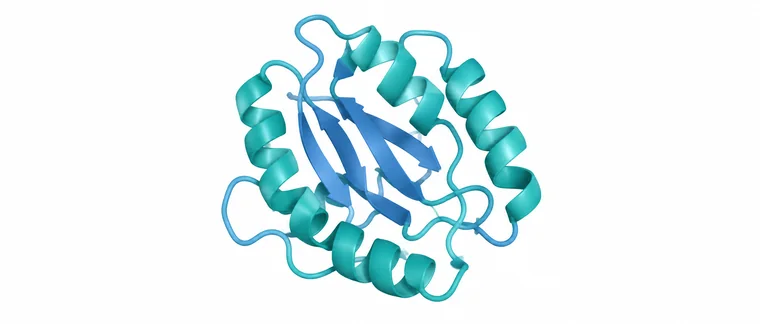
MW ~10–100+ kDa
- Complex folded 3D structures (α-helices, β-sheets).
- Susceptible to denaturation and aggregation.
Analytical focus: Secondary and tertiary folding, and activity.
Heterotetramer
Monoclonal antibodies
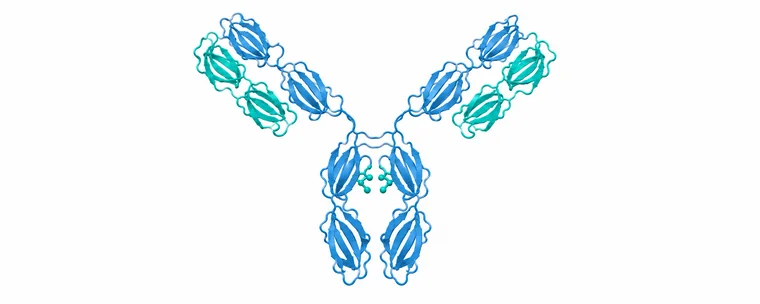
MW ~150 kDa
- Y-shaped four-chain glycoprotein (two heavy, two light).
- Complex post-translational modifications (PTMs).
Analytical focus: Glycosylation, charge variants and binding.
The US FDA defines a protein as any alpha amino acid polymer with a specific, defined sequence that is greater than 40 amino acids in size; a polymer of 40 amino acids or fewer is a peptide.
Primary structure
Mass, sequence, disulfide bonds, PTMs, identity and purity.
LC-MS/MS · MALDI-TOF · peptide mapping · Edman · AAA · RP-HPLC
Secondary structure
Fold composition, structural fingerprint and thermal stability.
CD · FTIR · Raman · DSC
Higher-order structure
Tertiary fold, aggregation, fragmentation and oligomeric state.
Fluorescence · SEC-MALS · SEC-HPLC · DLS
Biological characterization
Binding affinity and kinetics, potency and Fc-mediated function.
SPR · cell-based bioassays · ADCC / CDC
Manufacturing capability
Capacity in Hyderabad
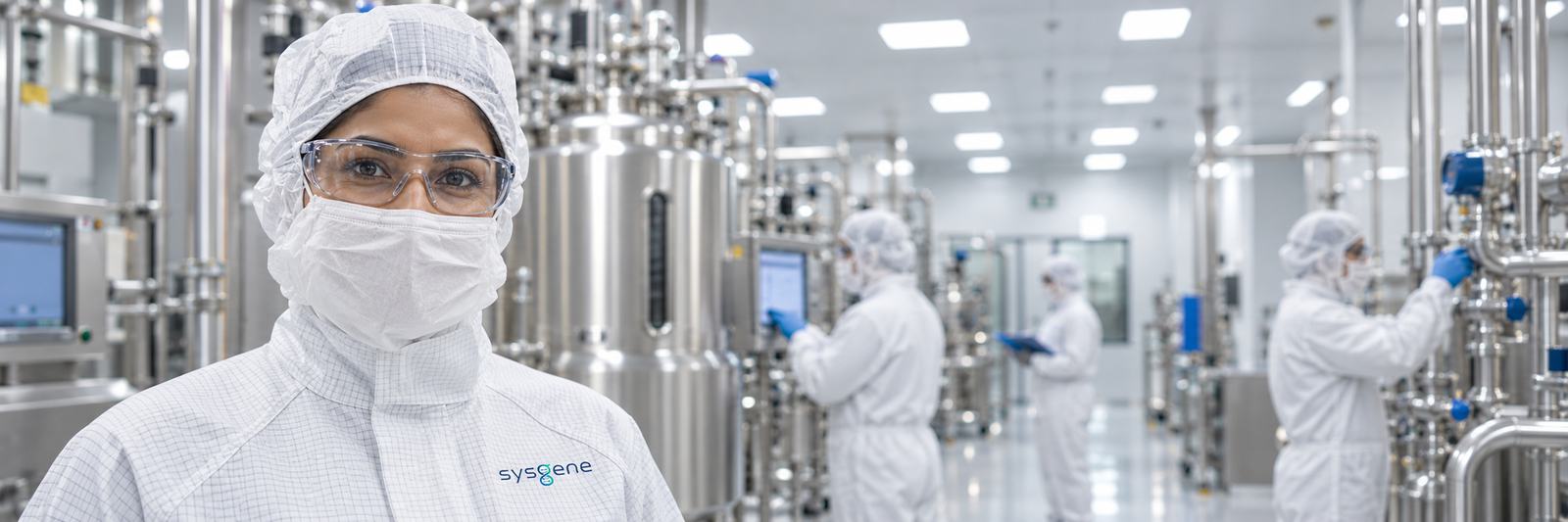
SysGene operates in-house mammalian bioreactor capacity at 5 L scale and microbial fermenters from development scale to 30 L, 100 L, and 1,000 L in Hyderabad, with 5,000 L capacity planned. Programs may be scoped for GMP or non-GMP manufacture, subject to facility, product and regulatory fit. Additional capacity and specialized capabilities may be delivered through qualified partners.
Discuss a development need
Tell us where you are in the process and we will map the relevant capabilities to your program.
Contact SysGene